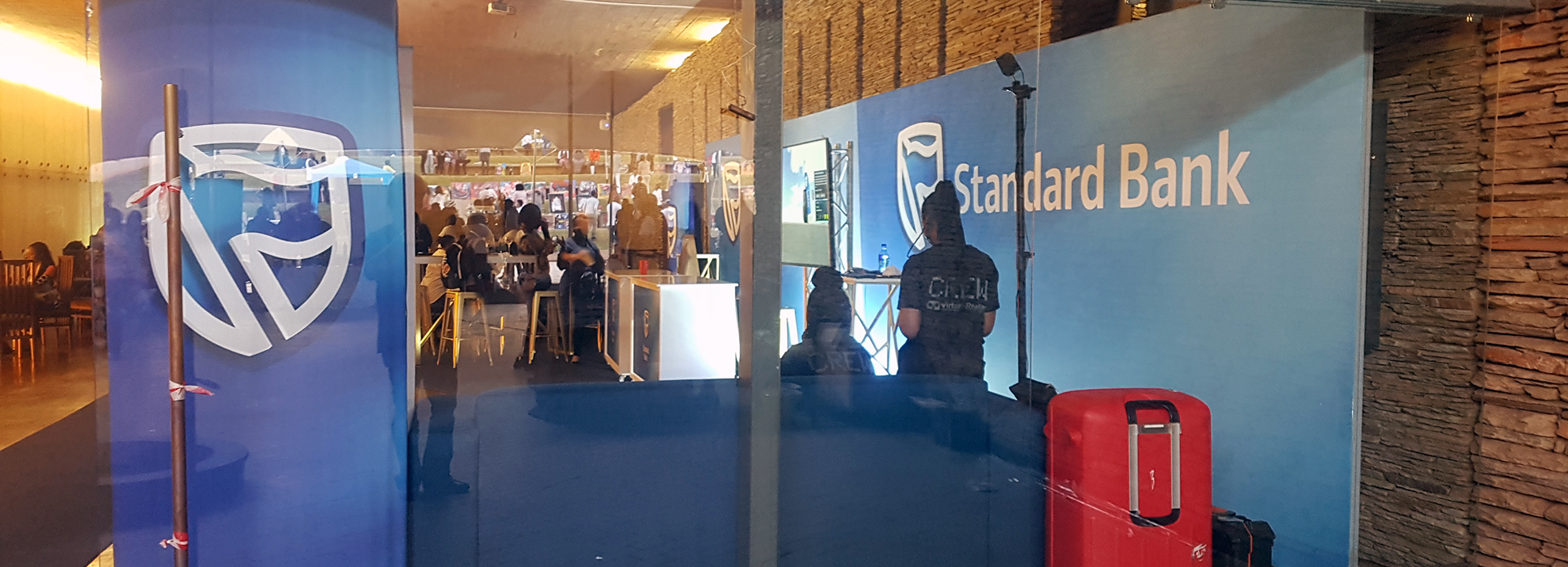

Showcasing Smartphone Banking with Virtual Reality: A Case Study on Standard Bank South Africa
Standard Bank South Africa recognized the urgent need to illustrate the advantages of smartphone banking in a compelling manner. To achieve this, they enlisted Mixed Reality South Africa to create an innovative Virtual Reality (VR) game designed to highlight the convenience and efficiency of digital banking compared to traditional branch visits. This article delves into the development, implementation, and impact of this groundbreaking VR experience, showcasing how it effectively conveyed that smartphone banking is the future.
Project Objectives and Audience
Adapting to the Digital Shift
In response to the closure of over 100 branches across South Africa, Standard Bank sought to emphasize the benefits of online banking. The primary objective was to showcase the ease of performing financial transactions from any location, thereby encouraging users to embrace digital banking solutions. The VR experience was meticulously crafted to appeal to a diverse audience: tech-savvy millennials, busy professionals, and older clients who might be reluctant to transition from traditional banking methods.
Targeting Diverse Demographics
The project aimed to create an engaging and memorable experience for all age groups. By highlighting the simplicity and convenience of smartphone banking, the VR game sought to bridge the gap between varying levels of technological comfort and demonstrate the clear advantages of digital banking.
Conceptualization and Design
Creating an Immersive VR Environment
The initial phase of the project involved brainstorming and conceptualizing a highly immersive VR environment that closely mirrored a Standard Bank branch. The goal was to juxtapose the mundane nature of physical banking with the vibrant, interactive qualities of digital banking. We developed a comprehensive blueprint outlining the virtual bank’s layout, the activities participants would undertake, and the technical specifications required to deliver a superior VR experience.
Choosing the Right VR Hardware
The selection of VR hardware was a critical decision, with options including Oculus Quest, Oculus Rift, and HTC VIVE. Each choice was evaluated for its ability to provide a seamless and immersive experience, ensuring that participants could fully engage with the VR application without technical limitations.
Development Process
3D Modeling of the Bank Branch
A cornerstone of the VR experience was the creation of a photorealistic 3D model of a Standard Bank branch. Utilizing cutting-edge 3D scanning technology, we captured precise measurements and specifications of an actual bank branch. This allowed us to recreate the bank’s interior with exceptional accuracy, including details such as furniture, lighting, and textures. The resulting 3D model was an exact replica of the physical branch, enhancing the realism and immersion of the VR experience.
Photorealistic Details
Every detail of the 3D model was meticulously crafted to replicate the real-world bank environment. From the texture of the walls to the arrangement of the furniture, participants experienced a high level of fidelity that made the virtual branch feel convincingly real.
Technical Accuracy
The precise measurements and attention to detail ensured that the virtual bank was a faithful reproduction of the actual branch. This technical accuracy not only bolstered the realism of the experience but also reinforced the effectiveness of the VR game in demonstrating the ease of smartphone banking.
The VR experience developed for Standard Bank South Africa stands as a testament to the potential of virtual reality in showcasing the benefits of digital banking. By creating a realistic and immersive environment, the project effectively communicated the advantages of smartphone banking over traditional branch visits. Through innovative design and advanced technology, the VR game has set a new standard for how financial institutions can engage with their audiences and promote the future of banking.